Showing posts with label Production skills. Show all posts

Monday, 20 April 2015

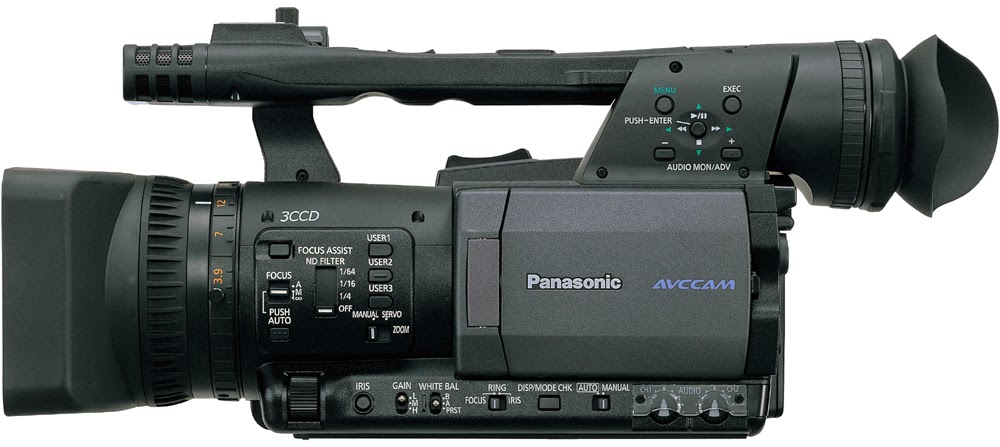
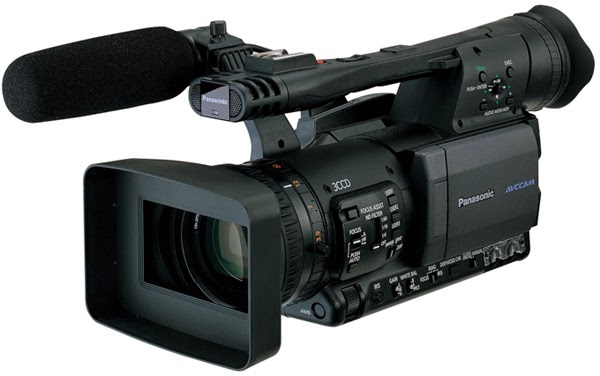
AVC CAMERA (PANASONIC AG-HMC151)


AVC CAMERA

For our live client projects we need the finished product to come of as professional as possible so to achieve that we will be swapping out the cameras that where used for the Loc/Doc drama and only be using the AVC cameras which is the easy alternative to its real name the Panasonic AG-HMC151.

One of the main advantages this camera has over the others is in can shoot in HD either at 1080p or 720p also instead of using tapes this camera can take an SD Card which means not only can you get more than 60 minutes of footage shot but there is no need to sit and wait for a tape to capture in real time.


Notes
  • Lowest class SD Card is class 4 its recommended to get a class 10 
  • 2 record buttons one on top one on the side one has switch to turn it on
  • Phantom power drains battery
  • SD Card needs re formatting and footage needs backed up by everyone
  • To reformat card on camera go to card functions menu  
  • Can only do playback on setting clip was recorded on 
  • USB input for copying file only and HDMI can be used if needed to plug into a TV
  • Shutter speed goes to 1000
  • Lines on camera monitor show safety crop zones
  • Input 2 down for mono
  • Shutter of means its set to default


Records in AVC format
Shoots in 16:9
1080/50i 25 frames interlaced
50i is not slow motion and gives video feel
720/50p can do slow motion

MD-Mutual density filter
Cine V - cinematic look
Cine D - color grade in post
Flvo standard default
B-str-strobe light
Spark- dinner/wedding for low lit situations
Only 2 Pre-sets daylight and outdoors


576 anything higher considered high definition
720-576 UK standard definition
720-1080
680-480 standard definition for You-tube and internet

Focus/Iris switch
Servo Electronic zoom

Camera 
http://pro-av.panasonic.net/en/sales_o/02products/products/ag-hmc151/ag-hmc151.html

Tech Demo: Fostex FR2


Fostex FR2

In today's tech demo (30/1/15) Lee talked about the Fostex FR2 field recorder which is worth around £1000 and is designed for recording sound while filming both indoors and alternatively location. On location it can actually be carried around by the sound op in a bag that you wear like a satchel from Indiana Jones which suspends the device and bag down on one side of your waste.


When it comes to powering the device the batteries get drained very quickly so if you are able to plug into the mains of the building/location you are at if you are unable to do so you will need to acquire 8x Duracell Batteries which only give you 30-40 Minutes of power so to be on the safe side it is always recommended to have plenty of spares at hand.
F Card - Will not break before the device its designed so if anything goes wrong all the stuff recorded will be safe because re shooting may be more costly than just replacing the Fostex especially if its on a big budget movie. A 4GB F card will record 3-4 hours or 14 hours

Switch of before adding the card and if there is a need to there is an emergency eject button also always format card before use to actually format the card on the Fostex go to the menu down to to disk format and accept if something pops for whatever reason and you don't want to accept either switch it of or click the home button to get out of the menu.

And if you want to playback something you can find that by going on the menu and down to file

Hertz - A unit of frequency
22.05 low quality
48 TV broadcast and short films


NOTES

  • Always take a record of the time code
  • 6 seconds before record can be captured
  • Don't use phantom power unless needed 
  • When recording stereo and only used one mic to record make sure to let the editor know
  • Can have horrible hissing sound all way through and it wont be recognized unless there is gaps
  • Use full jack headphones or an adapter on mini jack headphones
  • Use mono input for one mic
  • 20 is the lowest you want to go for a human voice recording
  • XLR Input on the left handside


Monday, 9 March 2015

Me Myself and I (Treatment)


Whilst working on a computer with small items showing the mise en scene of my life I fall asleep and get woken up by (ME/SIDE OF MY PERSONALITY) E.G Social Me, when i ask who it is social me/whatever me will say at which point I have a flashback including snippets of videos and pictures showing that side of my life another 2 copies of me show up showing another 2 sides/personality = more flashbacks and they wind up talking to me.

After this happens i wake up not sure what happened log off the computer which will show the script title page for Me myself and I starring Ryan Siggers X3 I then leave the room turn of the lights and credits role.

Friday, 6 February 2015

6/1/15 (TECH DEMO) TASCAM DR 40 LINEAR PCM RECORDER


TASCAM DR 40 LINEAR PCM RECORDER
In todays tech demo Lee talked about the Tascam DR 40 Sound Recorder

NOTES

  • Takes standard AA batteries (Will last whole day)
  • Takes SD Card
  • Never record on MP3 (Not good to edit with)
  • Record on WAV 16 BIT - WAV 24 BIT is overkill
  • Pre Record (Records 3 Seconds before clicking REC
  • Sound Number one killer in how people choose what to watch
  • Have to confirm Phantom Power on screen
  • Click REC twice to record

REC MODE
To change Mono - Stereo
Source int mic EXT in 1
EXT in-deep - Recording Internal and out

Mono   Stereo
   L           R
  Combo Jack

     48K TV
    44.1K CD

Play setting = Playback


When the line extends up to the triangle pointing upside down it means it has reached a good sound level for human voices anything over would not be good anything to far below would also not be good.


Sunday, 18 January 2015

16mm Tech Demo part 2 (Lenses)


In this production skills lesson (16/1/15) we where shown all the different sizes and kinds of camera lenses that go on 16mm and 35mm cameras ahead of our Me Myself and I project.

No matter what lens is used everybody that uses the camera needs to adjust the eye piece for there specific eye sight by focusing the black line because what suits them specifically does not suite anybody else because as everyones eye sight is different.

Measure the distance between a sign of a circle with a line through on the side of the camera to the subject in front.

Prime lens - Is much sharper than a variable lens has better F stop but unable to zoom or adjust focal length

Variable lens - can zoom and comes in 10m to 100m

F stop - Is a physical iris that is most commonly opened to the number 1.4 also a faster the F stop effects the depth of field

T stop - Transmission of light through lens

Aperture - Iris controls how much light comes through also effects depth of field

ISO - Film speed


16m Camera


  • 24-25 closest to the human eye
  • 50mm - Telephoto
  • 100mm -


35m Camera

  • 24mm - wide angle lens that shoots in panorama and stretches perspective
  • 50mm - closest to the human eye
  • 100mm - (Telephoto) gives a tighter crop and foreshortens the perspective


24mm lens = 84 degrees
50mm lens = 47 degrees
100mm lens = 18 degrees

All 35mm numbers are equivalent to 16mm by 1/2 them


NOTES

  • Don't leave the lens of a long time when changing or any other time unless you cover the whole as dirt can get inside.
  • Never touch the glass part on the back or front of the lens and hold in the middle
  • Always ask what the lens mount is
  • To eject the lens click the two buttons under the lens and twist 


16mm Tech Demo part 1 (camera)

16mm Tech Demo

In this production skills lesson (9/1/15) we where introduced to the 16mm camera and film for the first time ahead of our me myself and I project in which we need to include stuff we shot on 16mm.

Being a much heavier camera than the usual ones we use it requires a stronger screw and sturdier tripod.The battery on the this camera can last a long time up to 2 days depending how much it is used because a lot of the cameras mechanical components are not powered by the battery like todays cameras.Which is the second reason other than being the only charger the department has that its not issued out during location shoots.

It also needs to be thoroughly cleaned inside and out as a single speck of dirt,hair or anything else small enough to fit inside can totally ruin a film and the camera if it gets on the lens or inside the camera.Also being such an old camera parts are not easy to come buy which would make any repair costly/impossible.

Exposure to light is also something to think about as it will also destroy a film so when inserting or removing a reel of film in the camera it needs to be done in pitch-black the way this is achieved is by placing both in a black bag that looks like a t-shirt with arms but no bottom then only using your sense of touch because you cant see what you can add and remove the reel from the camera without worrying about it being exposed whilst still trying to not touch anything other than the very end of the film which can also damage it.

The first 5 foot to 10 feet of film is expected to be rendered useless and lost this way

Notes

  • No such thing as film with sound
  • Shutter angle = shutter speed
  • Super 16 is a film strip that achieves 16:9 by taking away the sprockets from one side replacing it with more picture
  • When playing back the film the less number of frames the faster the footage appears back the average is 24 frames per second.
  • 2 cleaning cloths one for inside one for lens
  • Magnet clamps magazine in
  • Never remove the mother board
  • Leave inner cores in camera rare and hard to find otherwise
  • cut film half way through

Wednesday, 10 December 2014

Production Skills: Continuity


Continuity

The whole idea of editing is to create one continuous flowing narrative by assembling multiple takes and camera shots/angles and piecing them together. The hardest part of this is making sure not only the scene is continues but also reality based with everything making sense e.g random objects not appearing/disappearing other wise the illusion of continuity is broken which sometimes ruins peoples viewing experience or makes it better because its fun to seek them out and make a game out of it.

Having continuity errors in movies is such a common occurrence because its so hard to keep every aspect of a shoot the same E.G (costume,props and extras) over the course of days to months which is how long it can take for a shoot to complete. 

Because it is such a a big problem there is actually a job role set in place to try and prevent mistakes happening called a script/continuity supervisor.

Below are some examples of continuity mistakes in big hollywood movies all from the ultimate website for this kind of stuff http://www.moviemistakes.com/


Memory Exercise 
Because the biggest part of preventing/spotting continuity mistakes is memory based if there is no visual record to double check with. In the lesson after watching some clips from films Mike set up a practical exercise for the whole class.

Consisting of a table in the centre of the room with random objects spaced out the class was then split into two groups the first would be given some time to memorise how things where positioned on the table then that group would leave the room giving group two the chance to tweak around with things on the table while group one had a minute out side.

After group one had picked up on everything that had changed the groups swapped roles both groups when asked to spot the difference where able to spot pretty much every thing that had changed

We where also shown the video below where you have to focus on the number of times the ball swaps hands whilst your focussing on that other things happen which you probably don't catch the first time E.G (Black shirt girl leaving and Gorilla appearing and disappearing)


Monday, 8 December 2014

Production Skills: Lighting


LIGHTING

Lighting Gels
Gels are sheets of multi-colored plastic that are used to modify lighting temperature to achieve multiple effects and moods in certain scenes.

Orange = sun
Blue = outdoor light


When you have selected the color sheet you want you simply attach it to the barn doors (as can be seen on the left) of a light making sure that the gel is close enough to cover the light which creates a beam of coloured light but not so close that it can catch fire also let the barn doors cool down before replacing any colours.This is when you should white balance the camera.


A useful website for finding the right Gel to use and how to use it is http://www.leefilters.com/ which has as wide of a color spectrum you would want 


Scrims
Scrim paper is also thin material that can attached to the barn doors of a light the purpose of scrim is to reduce the lights intensity.


Reflectors
A reflector is a cheap, light and powerless lighting tool that can be used to reflect multiple sources of light including (Sun,White Objects and lights) collapsible reflectors can come in a range of colors (White,Silver and Gold) each achieving different outcomes E.G gold causes contrast

All of these factors make it an ideal tool to use on a film/photography shoot as they are easy to control and hold and if you wanted to you could also attach them to a tripod also because they are cheap if you wanted to you could buy multiple ones.


Specs
Red Heads = 800 WATS

Blondes = 2000 WATS


3 POINT LIGHTING

Red head lights are useful for multiple types of lighting effects including these 3 which are commonly used for TV interviews and photo shoots


(Back-light) Ililluminates person or subject from behind which creates depth and also helps the subject pop out which you can see happening in this scene from A Clockwork orange (1971). This kind of lighting

effect is commonly used for


(Fill Light) Is a secondary light used to lighten shadows on the opposite side of the key light and also the ones created by the key light source which is the most intense of all the lights on a 3 point lighting shoot. Creating lighter shadows is achieved by moving this light further back


(Key Light)
The key light is the main light and therefore the strongest its purpose is to lighten the main 
subject/object its placed at an angle on one side allowing for some shadow on the other side


This is what a 3 point lighting setup looks like from a birds eye view as you can see all three lights are positioned to do the perspective jobs  (Main,Fill and Back) you would expect to see this kind of setup for TV interviews,photography shoot

In Lee's tech demo we attempted to do something similar and also experiment by sticking a person in a chair in the center of the room and proceeded to play around with the lights to see what we could achieve with the camera and get projected on the screen

Residual current device (RCD)

RCD's should always be used especially when filming on location as some older buildings electrical wiring was not build with the kind of electronics and voltages we use today in mind.At least if you take this safety device and plug it in can  measure electrical current flowing through a circuit and automatically turn off the electricity if a problem is detected. The device is small and easy to use once plugged in
 and essential for preventing fire/death on location.

Step 1 : Plug into socket
Step 2 : Click reset button
Step 3 : If click is not instant don't use RCD

Amp = watt x volt

0.3 amps when wet
1 amp to kill

230V AC National Average

http://www.electricalsafetyfirst.org.uk/guides-and-advice/electrical-items/rcds-explained/

Sunday, 7 December 2014

Production Skills :Smoke Machine


Smoke Machines

The class was introduced to the smoke machines for the first time in Lee's tech demo in which we attempted to create 3 different shots with different lighting and smoke effects we where also shown how to prevent the smoke alarms going of using a certain kind of cap that fit snuggly over them.

Because certain people in the class suffer with asthma we where also shown just how important it is to check with crew and actors before a shoot when using smoke especially in a confined space such as the studio where this tech demo took place and where it is easy for the smoke to linger in the air for a long time.

I took three videos showing the attempts at getting certain shots such as a vampire rising from the dead in a graveyard and simply walking through the smoke as if the setting was a polluted victorian London like the kind you would imagine Jack the ripper would hide and finally just feet passing through smoke.

All the shots that where attempted worked well and although i cant think of a use for the machines at this point in time i would like to use them for ad-least one production in the future.

Thursday, 4 December 2014

Production Skills (Message)


THE MESSAGE

(Me with one of lights I was controlling)

 As part of a technical exercise the class was put into small groups of about 4 or 5 and tasked with creating a short two to three minute scene that was themed around some kind of moral message the way my group fairly picked between our ideas was by putting every body's idea (mine being karma) into a random word selector on Google,Daniels idea of grief came on top so that's what we went with.

Groups Ideas
Idea 1: Obsession
Idea 2: Karma
Idea 3: Revenge
Idea 4: Grief
Idea 5: Passion


Final Idea Decision: Grief

A young man called Stan is drinking heavily as he is staggering towards a table. It has been three years after his best friend Francis’ death and Stan still has flashbacks to the event and can’t seem to move on, not that he really wants to. As he approaches slumber a voice rouses him he lifts his head up to see the relaxed, peaceful spirit of his best friend Stan looks on in awe and fear as he starts to blame the drink Francis puts his mind at rest by telling him it’s not an illusion he further tells Stan to not dwell on the past and move forward with his life, in which Stan starts to panic at the thought.
Francis sees his friend’s anguish and decides to make a deal, they both play a game of poker if Stan wins he can mourn him for the rest of his life and be a miserable alcoholic drunk however if Francis wins Stan needs to move on if not for himself then for his friend. Stan hesitantly accepts and Francis takes out the deck of cards along with a full bottle of whiskey Stan takes out Francis’ old fob watch and puts it down at the centre of the table the game begins.

After three rounds Francis wins the game with four aces Stan bows his head in defeat and sadness that he will have to forget about his friend before he departs Francis puts his hand on Stan’s shoulder and tells him “It’s good to mourn though not for years, it’s good to grieve though not for a lifetime go forth, live a little just remember I’ll always be watching”. Stan lifts his head up to find Francis gone letting his words sink in he drinks the last remnants of his whiskey, slowly stands up and gives a small smile before staggering out to get a life. (Written by Daniel Whalen)


The Group
Daniel Whalen - Director/Actor
Rebecca Darby - Camera
Nathan Cawley - Actor
Chloe Lowe - Editor
Micheal Reynolds - Boom operator
Me - Lights and Boom

Equipment
1 Panasonic 3CCD
1 Camera Tripod
2 Read Heads
2 Light Stands
1 Boom Mic/Pole
1 Cable
2 Shrim Papers

Shooting Dates
   13/11/14
(Me taking over on boom)                                4/12/14                                   (Me controlling light)

Because Daniels idea was the one we would be making he become Director and also wrote the script everyone else decided on what job roles they wanted  mine being lighting which i was happy to do as I had previously never really dabbled in lighting. I also took over on the boom mic on the first day of filming when Micheal had to leave early for an appointment

All the shots where filmed in one location (Folio-interview room) over the course of two days totaling about 6 hours. Apart from some pieces of equipment and bags lying around in shot and a few continuity issues I think the shoot went very well and once edited together should make a good little short.


(Rebecca looking back at the previous take) 

(Filming Nathan for a take during the poker game scene)


          (Rebecca on Camera)                                                                            (Micheal on boom)


(Messed up take)


(Daniel talking Nathan through scene)


(Talking through scene)


(Filming poker scene)


(Micheal holding boom mic)

(Chloe editing)


PHOTO CREDITS 
GO TO CHLOE LOWE AND RYAN SIGGERS


get rest of pictures of chloe
reveiw finished product at some point maybe have it on youtube and link to video at bottom of this